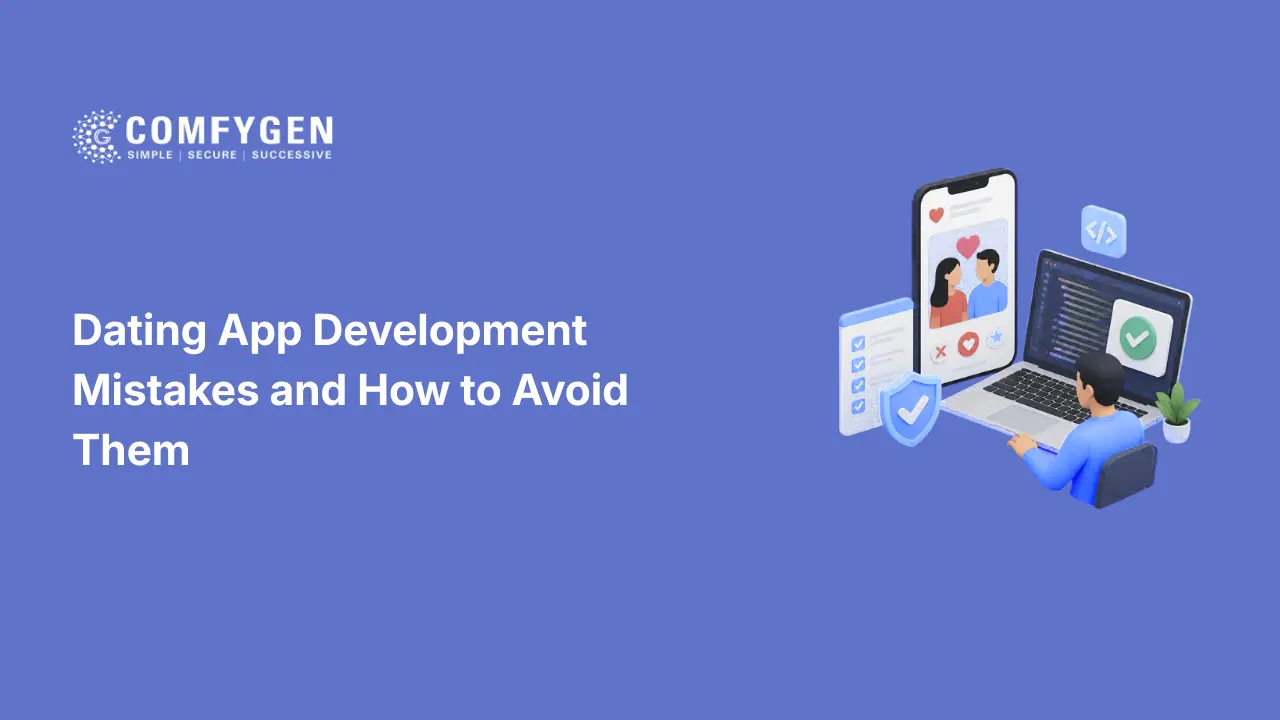





Building a dating app is about more than picking a few popular features and choosing a technology stack. Even a good idea can struggle if it is aimed at the wrong audience, becomes too complicated to use, overlooks user safety, or launches before there are enough relevant people on the platform.
The good news is that many of these problems can be avoided before they become expensive to fix. By making thoughtful decisions during planning, development, and launch, businesses can create a dating platform that is easier to use, more relevant to its audience, and better prepared for long-term growth.
In this guide, we’ll look at some of the most common mistakes made during dating app development, why they happen, and what you can do to avoid them.
1. Launching Without a Clearly Defined Target Audience
Trying to create a dating app for everyone may seem like a good way to reach more people, but it can make the product much harder to plan and position. A general dating app and a niche dating platform can have completely different expectations when it comes to profiles, matching, communication, and features.
Start by thinking about who the app is actually for. Your audience could be defined by age, location, lifestyle, interests, relationship goals, cultural preferences, or a particular community.
Having a clear audience also makes other development decisions easier. You can determine what information users should add to their profiles, which features are genuinely useful, how discovery should work, and what factors should influence matching.
How to fix it : Define your target users and initial market before development begins. Let those decisions guide your features, profile fields, user experience, matching requirements, and launch strategy.
2. Building Too Many Features Before Validating the Concept
It is easy to get carried away when planning a dating app. AI matchmaking, video dating, social feeds, live streaming, gamification, virtual gifts, and other advanced features can all sound appealing. But adding everything to the first version does not necessarily make the product better.
A feature-heavy first release can increase development costs, extend the timeline, and make it difficult to understand which features users actually find useful.
A better approach is to start with a focused Minimum Viable Product (MVP) that delivers the core experience. This might include registration, profile creation, discovery, matching, messaging, and essential safety controls.
If you are planning a custom platform, understanding the dating app development process can help you evaluate your requirements, technology choices, features, and development priorities before investing in advanced functionality.
How to fix it : Start with the core dating experience and validate it with real users. Add more features as user feedback, business goals, and product data show a genuine need for them.
3. Treating Safety as a Post-Launch Feature
Safety is not something you check only after the app is ready to launch. Dating platforms connect people who may have never met before, so users need practical ways to control their interactions and report behavior they consider inappropriate or suspicious.
Problems such as fake profiles, impersonation, harassment, spam, inappropriate content, and privacy concerns are some of the challenges in dating app development that can affect user trust and the overall experience on the platform.
Depending on the type of dating app and its audience, these measures can help users report problems, control unwanted interactions, and get support when issues arise.
How to fix it : Define safety, privacy, moderation, and security requirements during the planning and design stages. This allows them to become part of the product experience rather than being added as an afterthought.
4. Ignoring the Cold-Start Problem
A dating app needs more than downloads to be useful. Users need to find enough relevant and active people to make the platform feel worthwhile.
For example, an app could receive thousands of downloads but still feel empty if there are only a few suitable users active in a particular location or within a specific target group. When people repeatedly fail to find relevant matches, they may stop using the app.
This is why building enough user activity in an initial market can be more important than trying to attract users everywhere from day one.
How to fix it : Start with a clearly defined audience and focused geographic market. Build an initial community through waitlists, referrals, partnerships, local campaigns, influencers, or early-access programs before expanding into additional markets.
Need Expert to Fix Dating App Development Mistakes?
From feature overload and complex onboarding to weak matching, safety gaps, and poor testing, our dating app development team can help identify the right solutions for a reliable, user-focused dating platform.
Get Your Free Project Quote
5. Making the Onboarding Process Too Complicated
A dating app needs enough information to create useful profiles and recommendations, but asking users for everything upfront can work against you.
A long registration process, detailed questionnaire, or too many profile requirements can make users lose interest before they even experience what the app has to offer.
The first interaction should feel simple and purposeful. Users should be able to create a useful profile and start exploring without having to complete an overwhelming amount of information.
How to fix it : Keep registration and initial profile creation straightforward. Ask for the information needed to provide a useful first experience, then use progressive profiling to collect additional details as users become more comfortable and engaged.
6. Treating the Matching System as a One-Time Feature
Matching is one of the most important parts of a dating app, but it should not be considered finished just because the initial algorithm has been implemented.
Different dating platforms may use factors such as location, age preferences, interests, relationship goals, lifestyle, profile information, previous interactions, and mutual preferences to determine which profiles are shown to users.
You also do not necessarily need a complex AI system on day one. For an MVP, a well-designed rules-based matching approach may be enough if it produces relevant recommendations.
What matters is what happens after the match. If users are getting plenty of matches but rarely starting conversations or continuing them, the number of matches alone does not tell you that the system is working well.
How to fix it : Define your matching requirements before development, decide how success will be measured, and continue improving the matching experience using reliable user feedback and behavioral data.
7. Choosing Technology Based Only on Popularity or Cost
Choosing a technology because it is currently popular or because it is the cheapest option can create problems later.
There is no single technology stack that is right for every dating app. The decision should depend on what you are building, which platforms you need to support, the integrations involved, your development resources, maintenance requirements, security considerations, and your plans for the product.
A dating platform may need mobile applications, backend services, databases, APIs, real-time messaging, push notifications, location services, payments, authentication, analytics, and moderation functionality.
The goal is not to choose the trendiest technology. It is to choose technology that fits the product and can be maintained effectively.
How to fix it : Evaluate the technology stack against your current requirements and future plans. Consider development effort, third-party integrations, maintenance, performance, and the skills available to support the application over time.
8. Focusing Only on Downloads
Downloads are useful for measuring initial interest, but they do not tell you whether people are actually getting value from your dating app.
You could have a large number of installs and still have problems with profile completion, matching, conversations, retention, or subscriptions.
Instead of looking at downloads in isolation, pay attention to what users do after installing the app. Useful metrics include:
- Profile completion rate
- Daily and monthly active users
- Match rate
- Match-to-conversation rate
- Response rate
- User retention and churn
- Subscription conversion
- Customer acquisition cost
These numbers can also help you identify where a problem might be occurring. For example, high downloads with low profile completion could point to onboarding friction. A high match rate but few conversations could indicate that users are not finding those matches meaningful enough.
How to fix it : Track the complete user journey—from registration and profile creation to discovery, matching, conversations, retention, and monetization—instead of judging the product primarily by download numbers.
Need Expert Help With Dating App Development?
FFrom seamless onboarding and smart matchmaking to security and performance, our dating app development team helps you build a reliable, engaging, and user-friendly dating platform.
Get Your Free Project Quote
9. Leaving Testing Until the End
Testing should happen throughout development, not only a few days before the app is scheduled to launch.
Problems discovered late can require changes to features, workflows, or interfaces and may push back the launch. More importantly, issues with core functions such as registration, messaging, payments, or notifications can quickly frustrate users.
Testing should cover important user journeys, including registration, profile creation, discovery, matching, messaging, notifications, payments, and account management.
It is also important to test the app across relevant devices, operating systems, network conditions, and realistic usage scenarios. Beta and usability testing can provide another layer of feedback before the application reaches a wider audience.
How to fix it : Test important features throughout development rather than leaving everything until the end. Include functional, UI/UX, compatibility, performance, security, payment, messaging, and beta testing before launch.
10. Launching Without a Plan for Continuous Improvement
Getting the app into the App Store or Google Play is only the beginning. Once real users start using the product, they will reveal things that may not have been obvious during planning or development.
You may discover that some features are more useful than expected while others receive very little attention. Users may also encounter friction that was not identified during testing.
That is why a dating app should evolve based on actual evidence rather than simply adding new features because competitors have them.
How to fix it : Create a post-launch improvement process. Regularly review analytics, user feedback, support requests, retention data, and business goals to decide which improvements should be prioritized.
Final Thoughts
A successful dating app is not necessarily the one with the longest feature list. It is the one that understands its users and makes the core experience useful, safe, and easy to navigate.
Before development starts, define your audience, validate the concept, prioritize the MVP, and choose technology based on actual requirements. During development, pay attention to onboarding, matching, safety, and testing. After launch, listen to users and use product data to understand what is working and what needs to change.
Avoiding common dating app development mistakes is not about trying to predict everything in advance. It is about making informed decisions, validating assumptions, and continuing to improve the product as you learn more about your users.
FAQ’s
What is the biggest mistake to avoid when developing a dating app?
Do I need AI matchmaking when launching a dating app?
How important is testing before launching a dating app?
Should a dating app be improved after launch?

Mr. Saddam Husen, (CTO)
Mr. Saddam Husen, CTO at Comfygen, is a renowned Blockchain expert and IT consultant with extensive experience in blockchain development, crypto wallets, DeFi, ICOs, and smart contracts. Passionate about digital transformation, he helps businesses harness blockchain technology’s potential, driving innovation and enhancing IT infrastructure for global success.