


Hospitals and Health Systems
Telehealth consultation platforms, patient scheduling, EHR and EMR integration, and clinical workflow tools that fit into how large teams already work.

We build telemedicine apps that let patients see a doctor from their phone, with video visits, appointment booking, e-prescriptions, and data records in one place. Comfygen has been building healthcare apps since 2019, so we know the parts that make or break a telehealth product. Those parts are stable video on weak networks, clean handoffs between patient and doctor, and data handling that holds up to a compliance review. Whether you run a clinic going digital or a startup launching a virtual care platform, we can build it end to end.


We cover the full build, from the first product plan to launch and support. Here is what we do.`
We build your app around how your practice or business actually runs, not around a template. The workflows, user roles, and integrations match your real requirements. This is a good fit if you have specific clinical processes, existing systems to connect to, or plans to scale across locations.

We build your app around how your practice or business actually runs, not around a template. The workflows, user roles, and integrations match your real requirements. This is a good fit if you have specific clinical processes, existing systems to connect to, or plans to scale across locations.
Our telehealth app development team builds native and cross-platform apps for patients and doctors, made to stay stable when the connection is not. Video, voice, and chat consultations keep working on 4G and patchy Wi-Fi, which is where most telehealth apps fall apart.
Our development of a doctor appointment app enables instant virtual consultations with certified doctors. Patients can book appointments, consult via video or chat, receive e-prescriptions, and manage health records, making online healthcare fast, reliable, and convenient.
We build apps that pull data from wearables and home devices, such as blood pressure cuffs, glucose monitors, and pulse oximeters, so doctors can track patients between visits and get alerted when a reading crosses a threshold. This is useful for chronic care and post-discharge follow-up.
Every app we build handles patient data under HIPAA rules, with encryption in transit and at rest, access logging, and role-based permissions. We also build on GDPR and India's DPDP Act where those apply. There is more on this in the compliance section below.
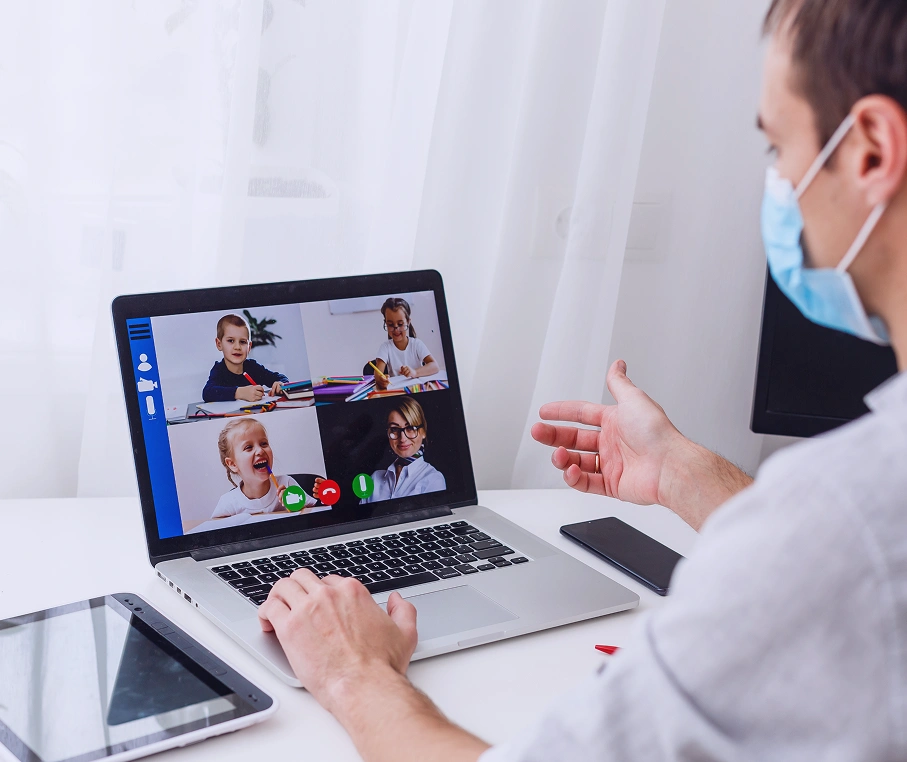
A telemedicine app is a healthcare platform that lets patients consult doctors remotely instead of visiting a clinic in person. Patients use it to book appointments, join video or audio consultations, chat with a provider, get e-prescriptions, and view their medical records. On the provider side, it handles scheduling, patient history, prescriptions, and billing.
Telemedicine apps are used by hospitals, private clinics, individual doctors, pharmacies, and healthtech startups. They are most common for follow-ups, non-emergency consultations, chronic condition check-ins, mental health sessions, and remote monitoring of patients who use wearables or home devices.
A hospital network and a solo practitioner need very different things. Here is how we tailor the build.
Telehealth consultation platforms, patient scheduling, EHR and EMR integration, and clinical workflow tools that fit into how large teams already work.
Virtual consultation apps, chronic disease management, mental health session support, and patient follow-up systems sized for smaller teams.
E-prescription handling, an online consultation-to-pharmacy handoff, medication reminders, and refill tracking. This pairs with our pharmacy app development.
Remote test ordering, secure result sharing between labs and clinicians, and result-review consultations.
Wearable and device integration, vitals tracking with alerts, and coordination tools for tele-nursing and caregivers.
MVP-first builds you can launch, test with real users, and expand, without rebuilding the foundation later
Every platform is built around three connected apps, one for patients, one for doctors, and one for admins. Here is what goes into each.
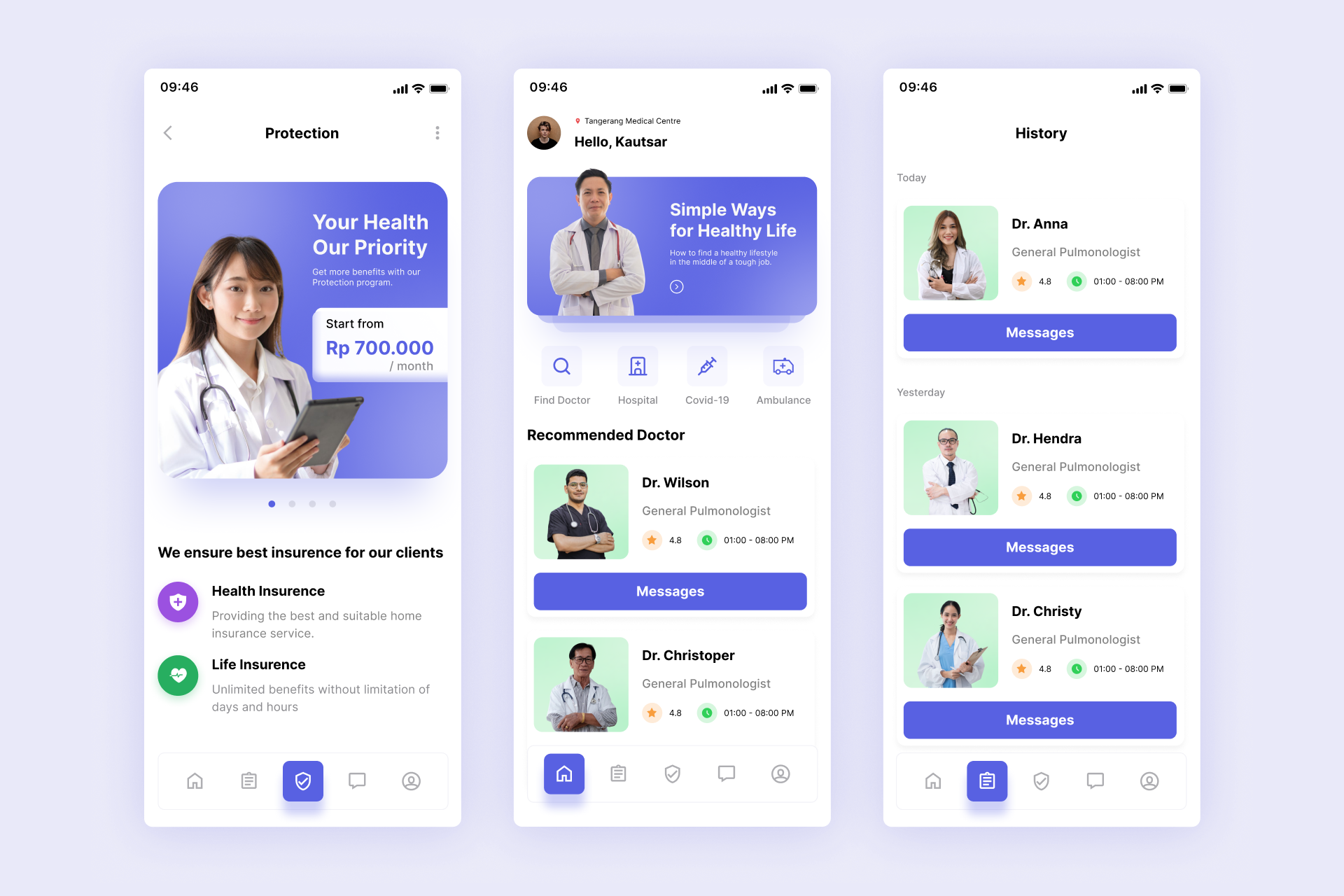
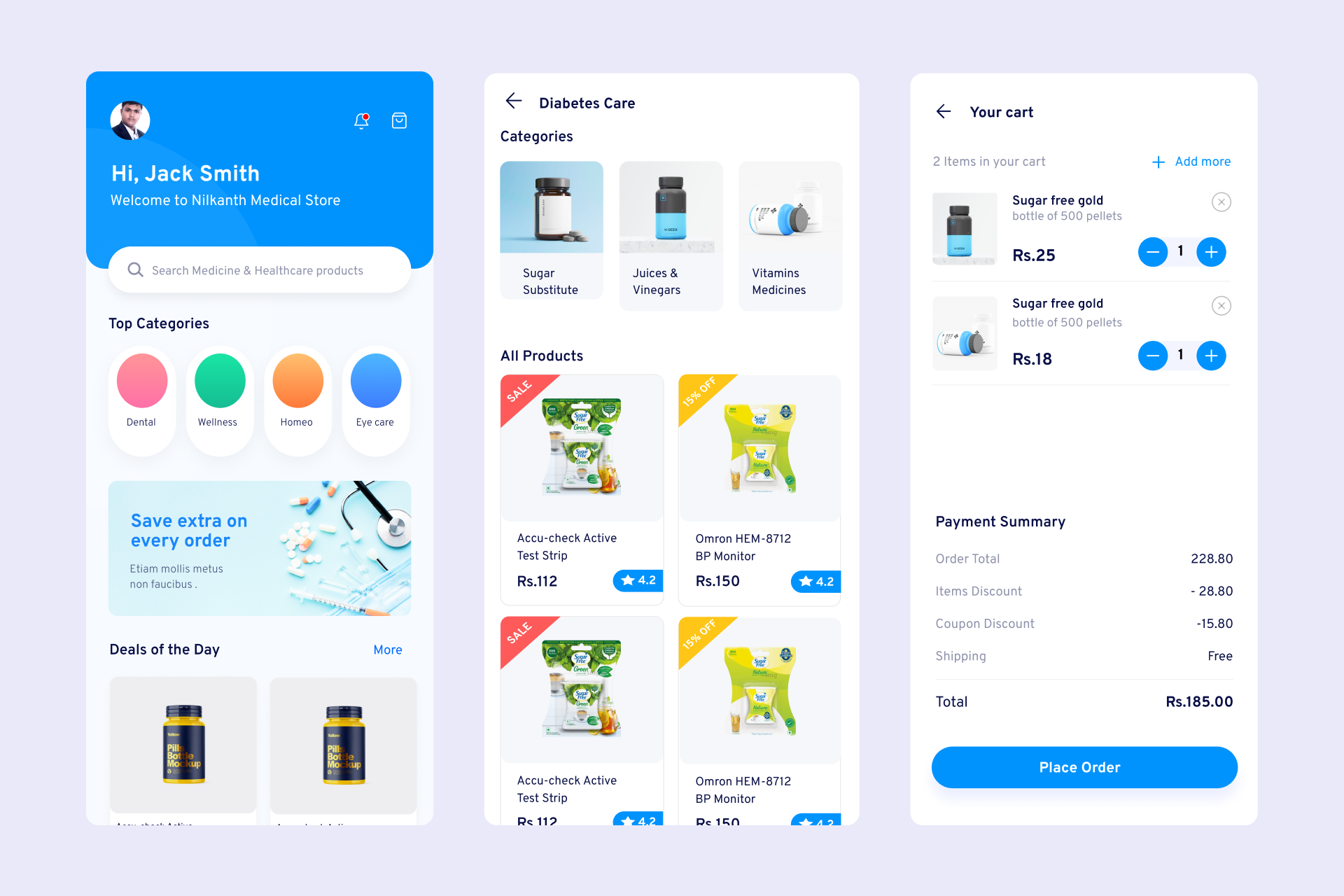
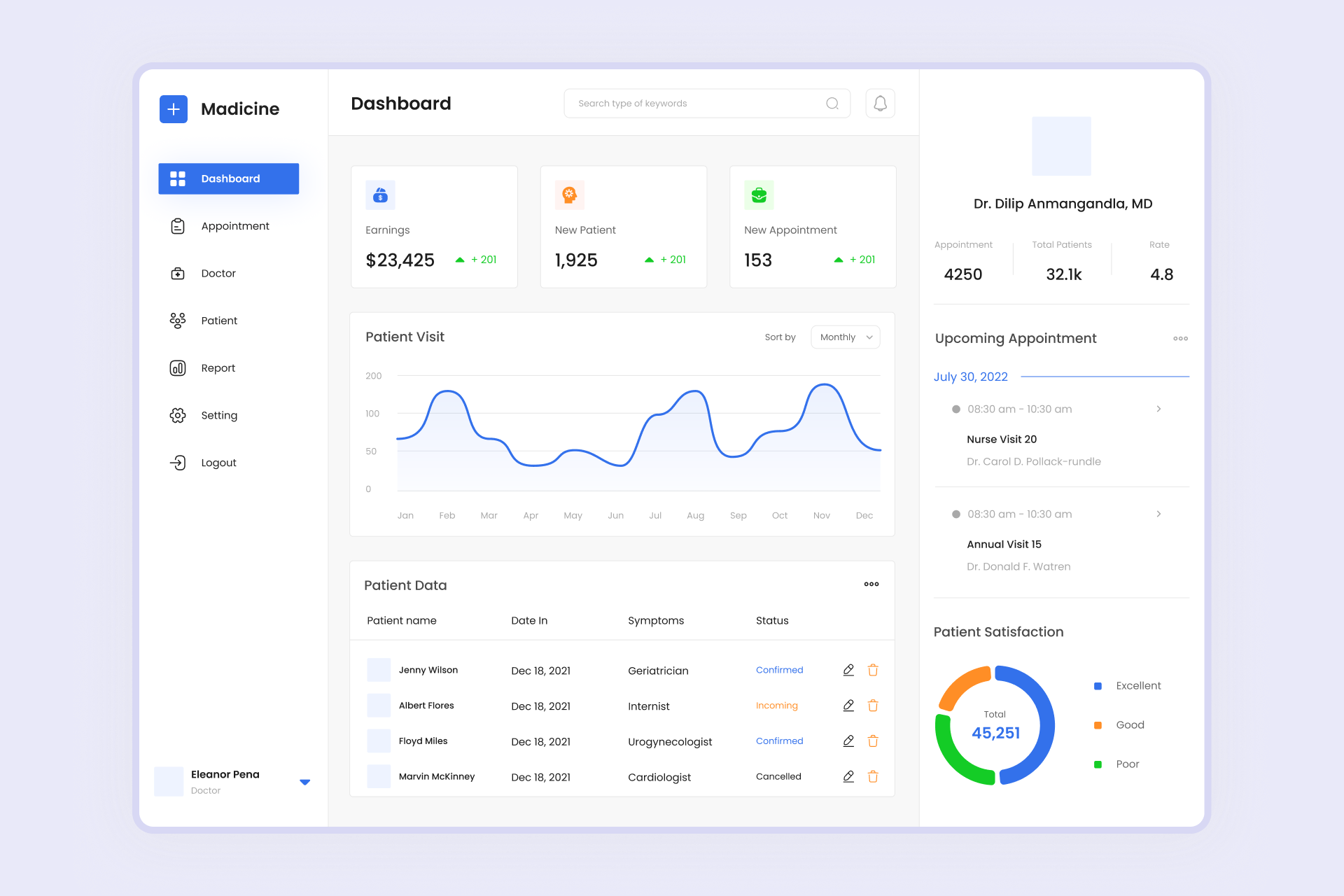
AI is only worth adding where it saves a doctor time or catches something earlier. Here is where we use it.
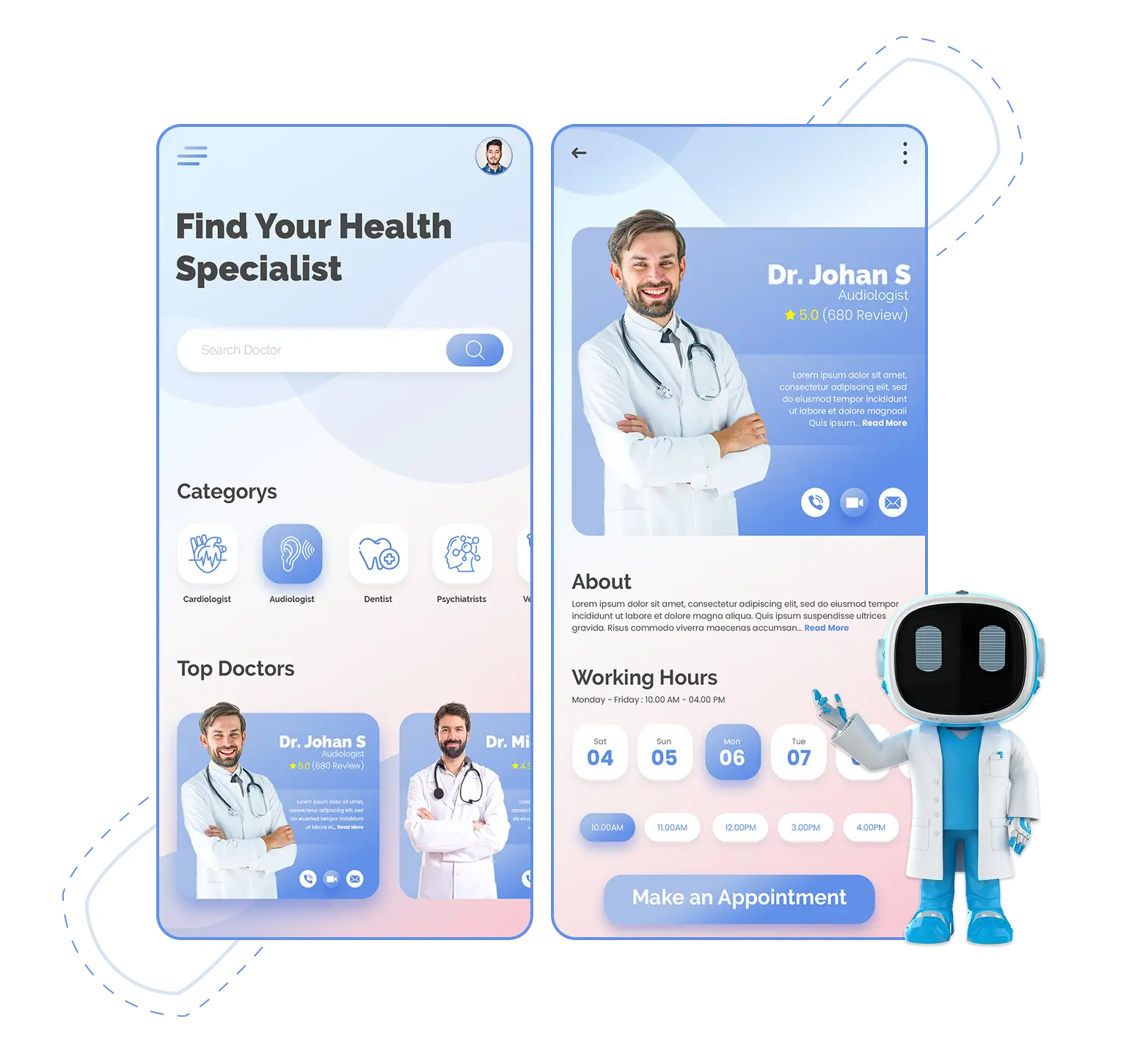
Patients describe their symptoms, and the app suggests likely conditions and urgency, which gives doctors a head start before the consultation. The clinician still makes the actual diagnosis.
These handle the repetitive load, such as answering common questions, booking appointments, and sending reminders, around the clock, without adding staff.
This reads patient history and vitals to flag risk early, which is useful for chronic and high-risk patients where a small change matters.
The app drafts consultation summaries during the session, so doctors edit them instead of writing from scratch. We build these with our AI development team.
Looking to build a secure and scalable telemedicine app? Comfygen is your trusted partner for custom telemedicine app development services.


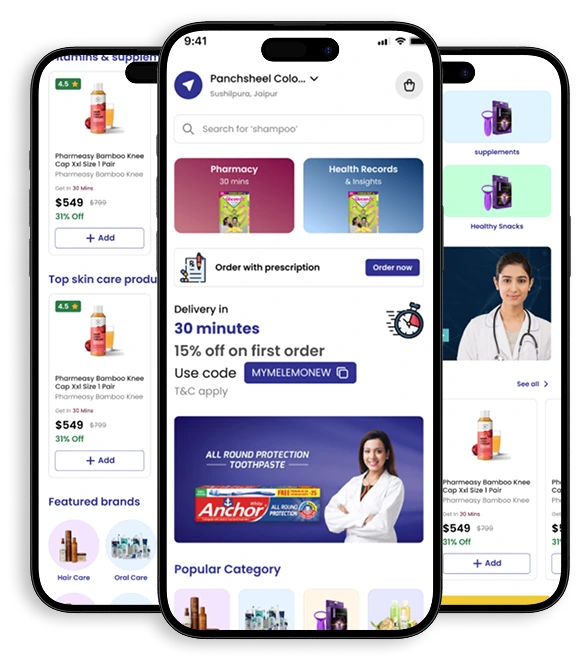


Helping healthcare providers and patients stay connected through simple, reliable, and easy-to-use digital solutions.
A telemedicine app that cannot talk to your existing systems creates double the work. We connect your app to the records and tools you already use, so patient data lives in one place.
We sync consultation notes, prescriptions, and history with your existing records system, so there is one source of truth per patient.
We build to HL7 and FHIR, the standards that let healthcare systems exchange data with each other. This is what makes your app interoperable instead of a data island.
We push prescriptions to pharmacies and pull results from labs directly into the app.
We add secure payment processing along with insurance eligibility and claims workflows.
We ingest data from connected health devices for remote monitoring.
Healthcare apps handle some of the most sensitive data there is. Here is exactly what we build in, and the regulations we build to.
We design systems with privacy-first architecture so your platform can support modern data protection expectations across different regions.
The front end and back end are the easy part. What separates a telehealth build is the video, real-time, and interoperability layer. Here is the full stack.
 React js
 Angular js
 Flutter
 React Native
 HTML5
HTML5 CSS3
CSS3 JavaScript
 TypeScript
 Next.js
 Swift (iOS)
 Kotlin (Android)
 Nodejs
 Django
 Python
 Java (Spring Boot)
 NET Core
 PostgreSQL
 MongoDB
 MySQL
MySQL Redis
Redis Google Maps API
 Mapbox
 Geolocation APIs
 AWS
AWS GCP
GCP Docker
 Microsoft Azure
 Kubernetes
 Razorpay
 Stripe
 PayPal
 Plaid (for banking APIs)
 UPI Integration
 TensorFlow
 OpenAI APIs
 Spark
Spark PyTorch
 Google Vertex AI
 AWS SageMaker
 NLP (spaCy / BERT)
 FHIR R4 APIs
 HL7 Messaging
 Epic SMART on FHIR
 Cerner Integration
 Twilio (HIPAA SMS/Video)Stripe / PayPal (PCI-DSS)
 Auth0 (Healthcare SSO)
We follow a clear, seven-step process, so you always know what is happening and what comes next.
We map your business model, users, and compliance needs into a build roadmap.
We design simple, accessible screens for patients, doctors, and admins, and test them for easy navigation.
We build the core app with a focus on video stability and secure data handling.
We connect video, payments, EHR, e-prescription, and lab and pharmacy systems.
We test encryption, access control, and vulnerabilities against HIPAA, GDPR, and DPDP.
We launch on secure cloud and app stores with proper configuration.
We provide updates, fixes, and new features after launch.
Comfygen is a leading custom telemedicine app development company that delivers a high range of telemedicine apps for our healthcare startup clients with unique value-based advantages. Our valuable customers recommend us for developing telemedicine software owing to the following reasons.

Our healthcare app development work has taught us the workflows and the compliance traps specific to this space.
We design data models and access controls around HIPAA, GDPR, and DPDP from the start, which makes compliance reviews far less painful later.
Video that holds up on a poor connection is the difference between an app patients use and one they abandon. We test for that specifically.
We handle updates, security patches, and new features, so we do not disappear once the app ships.
We plan the architecture so you can add users, doctors, features, and new regions later without rebuilding the app, which keeps your long-term cost down.
The same team handles design, development, integration, and testing, so nothing gets lost in handoffs and you always know who to talk to.
Do you need to extend your team instead of outsourcing the whole build? You can hire our telemedicine app developers full-time, part-time, or as a dedicated team. Each one has real healthcare app experience, works to HIPAA and GDPR standards, and stays in close contact throughout the project.

Hear what our clients have to say about their experience working with us
📹 Video URL: https://www.youtube.com/watch?v=kedGnt6T-DI
🖼️ Thumbnail URL: https://www.comfygen.com/comfygen-images/comfygen/nitesh-rajput-testimonial.webp
Book My Tuter
📹 Video URL: https://www.youtube.com/watch?v=-AkHiORQTjA
🖼️ Thumbnail URL: https://www.comfygen.com/comfygen-images/comfygen/sayead-shadab-arif-testimonial.webp
Froge Flex
Vietnam
My overall experience working with the company was very positive. The team demonstrated professionalism and strong technical skills throughout the project. Communication was clear and timely, which helped us stay on schedule. They were responsive to our feedback and flexible in adapting to changes. The final product met all our expectations and was delivered on time. Some minor improvements could be made in the testing phase, but overall, I am very satisfied with the collaboration.
Madison
Sonic Foundry Inc. noted that Confygen consistently fulfilled its commitments and demonstrated strong project management skills, keeping the app's development on track. The client was pleased with the final result.
Atlanta, Indiana
Comfygen Technologies developed and designed a blockchain and a web wallet for a cryptocurrency company. The team built a Proof of Authority blockchain based on Geth and a user-friendly web wallet.
Noida, India
An IT company hired Comfygen to design and build a dating app for both iOS and Android. The team also integrated features, including geolocation-based matching, swipe functionality, and a secure payment system
Jaipur, India
Comfygen Technologies developed and designed a food delivery app for a mobile app and website development company. The team was responsible for creating a user-friendly and scalable mobile app.
Dubai, United Arab Emirates
Comfygen provided software development services for an IT project management company. The team worked on three projects involving blockchain and e-commerce.
Denver, New York
Comfygen built a custom healthcare mobile app for a review writer company. The app included appointment scheduling, patient record management, and a telemedicine feature. The team also worked on its UI.
Denver, New York
I had a great experience working with Comfygen Technologies. The team is professional, responsive, and truly understands client requirements. Their technical expertise and timely delivery made the entire process smooth and stress-free. I’d definitely recommend Comfygen Technologies to anyone looking for reliable and quality IT solutions.
India
The team at Comfygen pvt ltd. is highly knowledgeable and professional. From the initial consultation to the final implementation, they were able to provide expert advice and guidance. Their commitment to excellence and customer satisfaction is truly impressive, and I look forward to working with them again in the future
Oman
Comfygen Private Limited is the best blockchain app development company in India that I have come across in recent years. They can deliver projects within the given timeline and as per our expectations. I recommend everyone to try Comfygen Private Limited services and products.
Germany
Very professional company. Everyone very friendly. The app we developed for us exceeded our expectations. I also think it's very good that the company also has a branch in Germany and that's why the overall communication was very good. We will develop the next project with you again.
A telemedicine app usually costs between $40,000 and $150,000, depending on features, platforms, integrations, compliance needs, and whether you build a custom app or start from a base solution.
A basic telemedicine app takes around three to five months. A full-featured platform with multiple roles, integrations, and AI features usually takes six to twelve months, depending on scope and complexity.
Yes, we build every telemedicine app to HIPAA standards, with end-to-end encryption, role-based access, and audit logging. We also build GDPR and India's DPDP Act where those regulations apply.
Yes, we integrate telemedicine apps with EHR and EMR systems using HL7 and FHIR standards, so patient records, prescriptions, and history stay synced across your existing healthcare software.
Core features include appointment booking, video and chat consultations, e-prescriptions, secure messaging, medical record access, payments, and separate apps for patients, doctors, and admins with role-based controls.
Yes, we build native and cross-platform telemedicine apps for iOS, Android, and web, using frameworks like Flutter and React Native to keep performance stable across all devices.
Yes, we add AI symptom checkers, healthcare chatbots, predictive analytics, and AI-drafted visit notes, while keeping clinical decisions with the doctor rather than letting the AI decide diagnoses.
Telemedicine apps are used by hospitals, private clinics, individual doctors, pharmacies, diagnostic labs, and healthtech startups to offer remote consultations, follow-ups, chronic care, mental health sessions, and patient monitoring.
Yes, patients can upload prescriptions, reports, and documents in the app, which doctors access during consultations. This keeps records in one place and speeds up pharmacy and follow-up handling.
We have the knowledge and skills to work on diverse niches with high-performing solutions. Get insights about the tech revolutions and their significance through our updated blogs.
The way people access healthcare has changed more in the last five years than in the previous fifty. Patients today expect to consult a doctor from their phone the same way they order food or book a cab. That shift is not temporary, it is where healthcare is going. Telemedicine app development sits at the […]
In April 2025, the HHS Office for Civil Rights recorded a 17.9% month-over-month surge in healthcare data breaches, with 66 incidents each exposing the records of 500 or more patients. Between January and February 2026 alone, 118 large data breaches affected over 9.6 million individuals. These are not isolated events. They represent a sustained and […]
Telemedicine apps have changed how patients and doctors connect. From online doctor consultations to remote patient monitoring, telemedicine solutions are now essential for modern healthcare businesses. If you are planning to build a healthcare app, the first question that comes to mind is how much does it cost to develop a telemedicine app? In this […]


